
Manure spreader FAQ: Best manure management practices for cattle producers
January 2026
Efficient manure management is more than a chore. It’s an opportunity to improve soil health, boost crop yields and save costs while you’re at it.
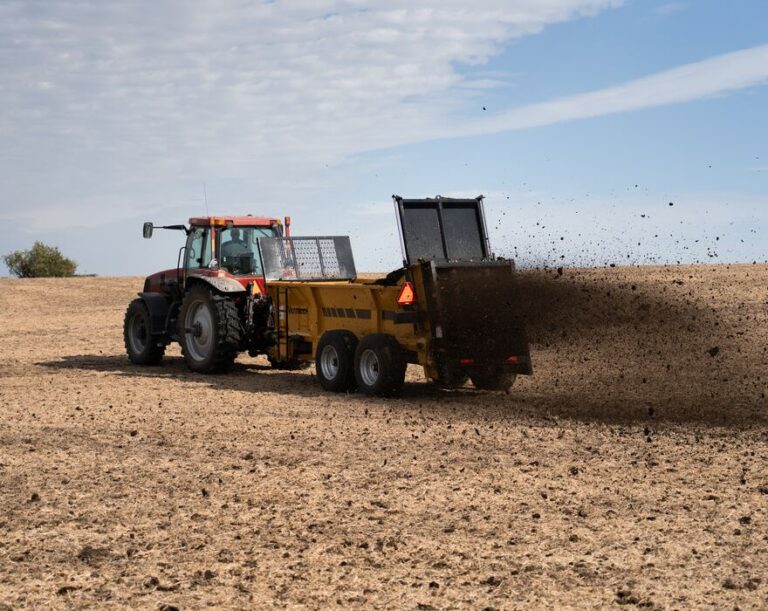
Manure spreaders help cattle producers turn waste into a valuable resource, delivering consistent, even coverage across the field. Whether you manage a large operation or a small herd, Vermeer equipment is built for durability, reliability and precision.
Let’s look at some common questions about manure spreaders and how Vermeer spreaders help maximize efficiency on farms and ranches.
What is a manure spreader and how does it work?
A manure spreader is an agricultural machine designed to distribute manure evenly over fields, transforming livestock waste into a nutrient-rich fertilizer that enhances soil fertility. Modern spreaders use mechanical or hydraulic systems to break up and spread manure, with options for solid, semi-solid or liquid manure. Farmers can calibrate application rates for optimal soil nutrition and crop yield.
What are the benefits of using a manure spreader?
- Improves soil health: Evenly distributed manure adds organic matter, boosts microbial activity and increases water retention in soil.
- Reduces fertilizer costs: Manure recycling decreases reliance on synthetic fertilizers.
- Promotes sustainable farming: Proper manure management supports eco-friendly practices and reduces nutrient runoff.
- Saves time and labor: Mechanized spreading is faster and more efficient than manual methods.
- Enhances crop yields: Uniform nutrient application leads to healthier crops and better yields.
How do manure spreaders improve soil health?
Manure spreaders ensure even application of nutrients, which improves soil structure, fertility and resilience. Manure adds nitrogen, phosphorus and potassium, fostering robust plant growth and increasing organic matter. Proper use of a spreader also minimizes the risk of nutrient loss and environmental impact.
What types of manure spreaders are available?
- Broadcast spreaders: Use rotating beaters or flingers for wide, even coverage of dry or semi-solid manure.
- Drop spreaders: Deposit manure directly beneath the spreader for precision applications.
- Liquid manure spreaders: Spray liquid manure or slurry using tanks and nozzles.
- Combination spreaders: Handle both solid and liquid manure for mixed operations.
What are best practices for manure spreading?
- Test manure and soil: Analyze nutrient content and spread based on crop needs.
- Calibrate your spreader: Ensure even application and avoid over-fertilization.
- Time applications: Spread manure when soil can absorb nutrients, typically in spring or before planting.
- Avoid runoff: Don’t spread before heavy rain or on frozen ground.
- Follow local regulations: Maintain setbacks from water sources and comply with nutrient management plans.
How does the manure spreading process work?
Manure is loaded into the spreader, transported to the field, and distributed using beaters, spinners or spray nozzles. Application rates are adjusted for field size and crop needs. Advanced spreaders use GPS and variable rate technology for precision.
What makes Vermeer manure spreaders different?
Vermeer manure spreaders are engineered for strength and performance. Features include a fully welded body, heavy-duty 80-grade chain, heat-treated boron auger flighting and teeth, GPS integration and weigh cell readiness. Maintenance is straightforward, and models are designed for consistent, even coverage.
Which Vermeer manure spreader models are available?
Vermeer offers a full lineup for any operation:
- MS300 manure spreader: Compact, efficient and easy to maneuver, the MS300 manure spreader is ideal for small farms, hobby operations or cattle producers working in tight spaces. If you need reliable performance without sacrificing agility, this model is built for you.
- MS400 manure spreader: With a larger capacity, the MS400 manure spreader is designed for midsize operations that need to move more material in fewer passes. It’s a strong fit for producers looking to balance efficiency and durability.
- MSC800 manure spreader: The MSC800 manure spreader features a fully welded body and heavy-duty chain, making it a dependable choice for smaller to midsize cattle producers who need rugged construction for tough jobs and consistent results.
- MSC1000 manure spreader: Built with a poly floor and full steel subfloor, the MSC1000 manure spreader is engineered for midsize to larger operations that handle wet, heavy loads and demand even, precise distribution.
- MSC1400 manure spreader: The MSC1400 manure spreader is the go-to choice for large operations focused on precision agriculture and advanced nutrient management.
Compare Vermeer mower spreaders: View Vermeer manure spreader brochure
What are the top features of Vermeer manure spreaders?
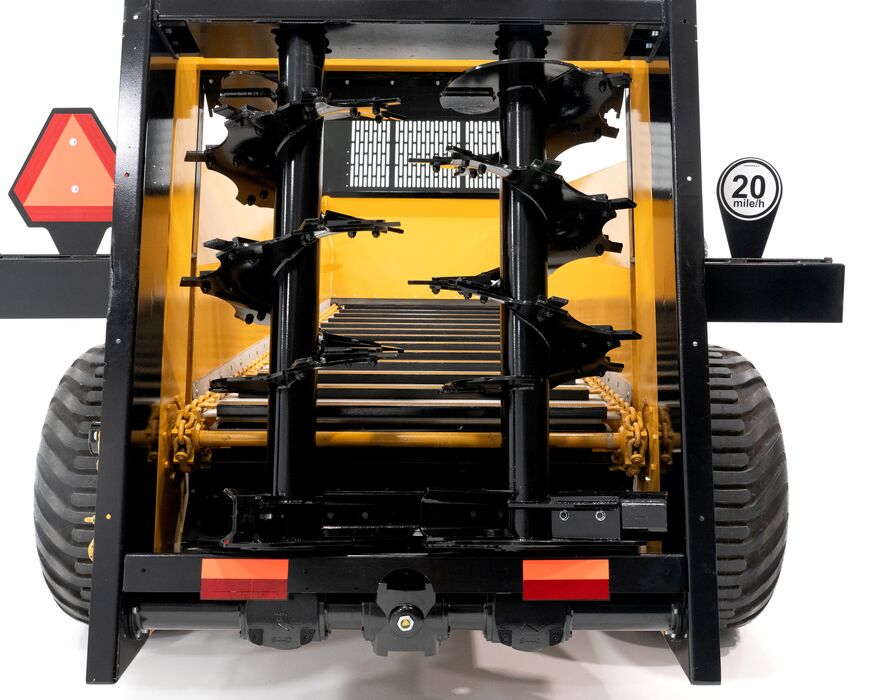
- Twin vertical augers for consistent, high-quality spreading
- Boron auger flighting and teeth for maximum wear resistance
- Heavy-duty 80-grade chain and full-width floor slats for reliability
- Poly floor with full steel subfloor to handle wet, heavy loads
- One-piece gearbox for smooth, long-lasting performance
- Ground-level greasing for easy maintenance
- Weigh cell ready for future upgrades
- Flotation tires and automatic light covers for safety and convenience
- Precision spreading with GPS and application rate mapping
How do Vermeer spreaders support precision agriculture?
Vermeer spreaders can be integrated with GPS technology and application rate maps, allowing for controlled, targeted spreading. All MSC-series manure spreaders are weigh cell ready, so you can add precision features as your operation grows.
Learn more about precision agriculture.
How easy is maintenance?
Maintenance is designed to be quick and hassle-free. Features like easy-to-replace floor slats, a robust one-piece gearbox, simple floor chain tensioning and ground-level greasing points help keep downtime to a minimum and productivity high.
What materials can Vermeer manure spreaders handle?
Vermeer manure spreaders are engineered to handle all types of manure and organic material, delivering a consistent, high-quality spread every time.
Where can I buy a manure spreader?
Choosing the right manure spreader starts with understanding your operation’s needs. Whether you’re running a small farm, a midsize cattle operation or a large-scale enterprise, Vermeer dealers are ready to help you find the best fit.
- Visit the Vermeer manure spreaders product line page for detailed specs, product information and model comparisons.
- Contact your Vermeer ag equipment dealer to check on local availability, schedule a demo, get pricing or ask about financing options.
- Explore flexible ag equipment financing through Vermeer Credit Corporation — designed to help you invest in the equipment you need with payment plans that fit your operation.
Vermeer Corporation reserves the right to make changes in engineering, design and specifications; add improvements; or discontinue manufacturing at any time without notice or obligation.
Equipment shown is for illustrative purposes only and may display optional accessories or components specific to their global region.
Please contact your local Vermeer dealer for more information on machine specifications.
Vermeer, the Vermeer logo and Equipped to Do More are trademarks of Vermeer Manufacturing Company in the U.S. and/or other countries.
© 2026 Vermeer Corporation. All Rights Reserved.