What changed on Vermeer 605 S-series balers — and why it matters
October 2026
When Vermeer engineers began developing the 605 S-series balers, they didn’t start from scratch. They didn’t need to.
A proven predecessor — the Vermeer 605N — has already earned the trust of hay producers thanks to its impressive capacity, steadfast reliability and ease of operation.
So Vermeer asked a question: What could make a great machine even better?
The answer: evolution.
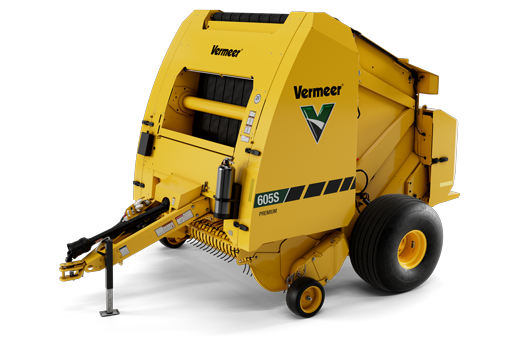
The 605 S-series features four models — the 605S Rancher, the 605S Signature, the 605S Premium and the 605S Cornstalk Special — each built around a core set of priorities to match the right machine to the right operation.
Here’s what makes a great machine even better: Improvements to how the baler feeds crop into the chamber, how it wraps and ejects finished bales, what operators can see and control from the cab, and how the machine protects uptime during demanding seasons.
Here’s what changed — and why it matters.
Change No. 1: A rotor replaces the direct crop feed for enhanced performance
The direct crop feed was a mainstay on Vermeer 6×5 balers for decades, and it got the job done. But when extensive testing proves there’s a better way, it’s time to evolve.
After years of success with rotor-fed design in other models, Vermeer brings it to the 605 S-series. Not for the sake of change. For enhanced performance that results in improved bale shape and reduced wear on a hardworking part of the machine.
The rotor takes crop coming off the pickup and spreads it evenly across the full width of the bale chamber as it starts forming into a bale. A driveshaft with fins disperses material consistently, even when windrows are thick, uneven or variable from one windrow to the next.
Why it matters: Uneven feeding ruins bale shape. When crop piles to one side or bunches in the center, density suffers at the edges; the bale goes off-round and the outer six inches (15.2 cm) — the layer that sheds moisture and holds the bale together in storage — gets soft. The rotor fixes that at the source. It also replaces one of the highest-wearing components in the previous system, simplifying maintenance over the life of the baler.
Change No. 2: Pickup options built specifically for the operation
The 605 S-series offers two distinct pickup configurations depending on the model, and the difference is worth understanding.
The 605S Rancher runs a 4-bar camless wide pickup designed for high-capacity, efficient harvesting of various crops, including heavy, wet, or dry hay, silage and alfalfa. It has 56 rubber-mounted pickup teeth and poly riser stripper bands specifically engineered to strip crop cleanly and resist wrapping. The camless design uses a solid reel with one rotational bearing on each end — this means fewer moving parts and less routine maintenance. Vermeer backs it with a 3-year pickup warranty on internal components not including parts and labor.
The 605S Signature, 605S Premium and 605S Cornstalk Special use a cammed wide pickup. The driven cam track actively controls when tines engage and release crop as it moves through the pickup into the baler, which delivers tighter feeding control in heavy or variable crops.
Rubber-mounted pickup teeth — which feature a torsional rubber coating that absorbs shock and outlasts standard wire teeth — are standard across the 605 S-series.
Why it matters: Pickup problems cause havoc in crunch time. A baler that wraps, plugs at the pickup or chews through teeth in heavy crops costs time and money. The S-series pickup designs address those failure points directly, whether the priority is low-maintenance simplicity or maximum capacity in the toughest conditions.
Change No. 3: Proven mechanical netwrap system with key upgrades enhances density and bale appearance
The netwrap system on the 605 S-series uses a proven mechanical design with belt-driven application — built to stay reliable and require minimal adjustment. The addition of the dual spiral spreader bar is where bale appearance gets a meaningful upgrade.
As netwrap leaves the roll and travels toward the bale, it has a tendency to bunch or narrow at the edges. The dual spiral spreader bar keeps the net spread evenly from edge to edge on every wrap.
Updated chamber geometry on the 605 S-series puts density to work across the entire bale. A density arm maintains consistent belt pressure from core to outer edge, building bales that are heavier, tighter and better suited to hold their shape through handling and storage.
Why it matters: Edge-to-edge coverage isn’t just cosmetic. Well-wrapped bales hold their shape, haul better and resist moisture infiltration, protecting nutritional value. For producers who sell hay, bale appearance is part of the transaction. Buyers immediately notice how a bale is wrapped.
Change No. 4: The Atlas Pro™ control system is standard across lineup
Every baler in the 605 S-series comes with the Atlas Pro™ control system. The 7.1-in (18-cm) color touch-screen monitor puts real-time bale performance data in front of the operator without requiring a stop. Access field-level stats for up to 50 fields — average moisture, bale count, bales per hour and more.
Bale shape indicators use belt tension sensors to show whether the bale is building evenly across the chamber before it leaves the machine. Moisture sensors in the bale chamber deliver real-time and field-average moisture data so operators know if conditions are right to keep baling.
In-cab density adjustments mean operators can respond to changing crop conditions without climbing down from the tractor. Number of wraps of netwrap can be adjusted from the seat as well. A rear-mounted net load button lets operators engage in net load mode without returning to the cab.
Further enhancing efficiency, a scale system that is standard on the 605S Cornstalk Special and optional across the other 605 S-series models weighs every bale during the wrap cycle and sends real-time weight data to the Atlas Pro control system.
No stopping. No guessing.
Why it matters: Baling decisions used to mean stopping, climbing down and manually checking the machine. The Atlas Pro™ control system changes that. Operators get the real-time feedback they need to make confident adjustments on the go.
Change No. 5: Auto Lube greasing system makes the hardest days easier
Routine greasing can get skipped when things get busy. An electronically controlled system shortens routine greasing by automatically delivering consistent lubrication to nine high-load bearings at predetermined intervals.
Auto Lube is optional on the 605S Rancher and 605S Signature, standard on the 605S Premium and standard on the 605S Cornstalk Special.
Why it matters: Inconsistent greasing accelerates wear on the hardest-working baler components. Auto Lube keeps those bearings protected on a schedule that doesn’t add to the operator’s workload.
Change No. 6: Auto-eject simplifies the bale cycle
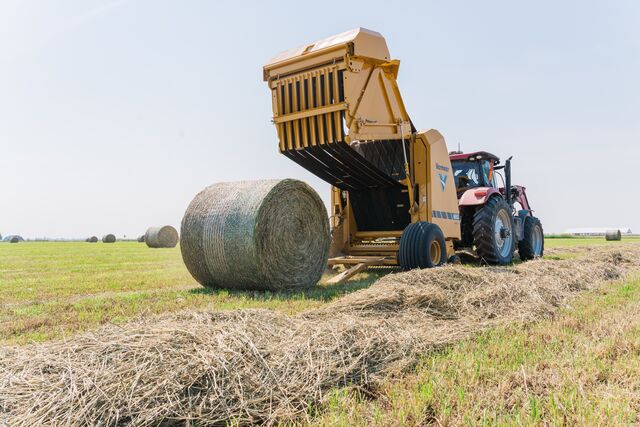
Auto-eject handles the end-of-bale sequence automatically. All the operator has to do is start and stop the tractor; the baler does the rest.
The auto-eject system is designed to work on a variety of different tractors and can be used on virtually any tractor with Power Beyond hydraulic capability. No specialized equipment is required. Hook up, turn on and let the baler work.
Auto-eject is standard on the Cornstalk special and optional on Premium balers.
Why it matters: Auto-ejection lets operators keep driving and working windrows while the baler manages the cycle. Auto-eject automation that is compatible with a wide range of tractors lets operators stay focused on what’s in front.
Change No. 7: Net lift takes the work out of loading netwrap
The net lift system uses a swing-out arm and electric thumb switch to raise the netwrap roll into the netwrap system. No more manual lifting of a heavy roll into position — the baler does it.
Net lift is optional on the 605S Rancher, 605S Signature and 605S Premium, and standard on the 605S Cornstalk Special.
Why it matters: Netwrap rolls are heavy and loading them repeatedly across a season adds up physically. For operations running hard, the net lift system is the kind of convenience that matters at hour 10 of a long day. For the 605S Cornstalk Special — where tough conditions already put more demand on the operator — it comes standard.
Change No. 8: TempSense™ bearing monitoring on the Premium and Cornstalk Special keeps baler health visible
The 605S Premium and 605S Cornstalk Special balers feature TempSense™ bearing monitoring. TempSense uses 16 wireless sensors on high-stress bearings to monitor their temperature in real time, sending alerts through the Atlas Pro™ control system when a bearing exceeds its optimal temperature range. It’s an early alert system for the failure that causes the most downtime and carries the highest fire risk.
Why it matters: A bearing that’s running hot is a bearing that could fail or start a fire. TempSense gives operators the chance to address a problem before it escalates into a breakdown or a fire.
The bottom line
The 605 S-series isn’t a departure from what made the 605N dependable. It’s what happens when a proven platform evolves. Attention paid to the details that matter most in a baling operation — consistent feeding, better bale appearance, smarter operator control, and components built to go season after season without giving you a reason to stop.
Talk to your local Vermeer ag dealer to find out which 605 S-series baler fits your acreage, your crops and the equipment already in your yard.